
This article is educational and is not personal medical advice. Pain, injury and rehabilitation are individual. A Pivotal Motion physiotherapist can assess your specific symptoms and recommend treatment. To book a consultation, visit pivotalmotion.physio or call (07) 3352 5116.
Disclosure: This post contains affiliate links. As an Amazon Associate, Pivotal Motion Education earns from qualifying purchases. There is no additional cost to you. See our Affiliate Disclosure.
Hypermobility is common among both sport and the general population. In day to day life it may not affect us, but if we play more sport or engage in more exercise we may begin to notice the effects. So what is it? Hypermobility is characterised by having excessive range of motion through your joints. It can occur throughout your whole body or just through some specific joints. So how do you know if you have it? Here’s a quick way that anyone can work out.
Beighton’s hypermobility score
The Beighton’s score is characterised by 9 tests of joint range of motion across the body. To be recognised as “globally hypermobile” you must score at least 5/9 on the test. The stages of the test are as follows:
1: Bending your little finger back at least 90 degrees – done on both sides. 1 point if positive on 1 side and 2 points if both sides positive
2: Bending your thumb to touch the inside of your wrist – done on both sides. 1 point if positive on 1 side and 2 points if both sides positive
3: Straightening your elbows out and they extend beyond 0 degrees – done on both sides. 1 point if positive on 1 side and 2 points if both sides positive
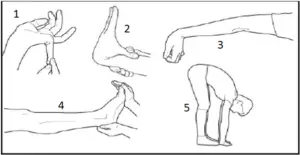
4: Standing with your legs straight. Do you knees extend past 0 degrees. done on both sides. 1 point if positive on 1 side and 2 points if both sides positive.
5: Keeping your knees straight, can you bend forward and place your palms on the floor. 1 point if you can touch both of your palms to the floor
So what does it mean if you test postive? This is a simple test for general hypermobility. A positive result in this test is usually indicative of being hypermobile. So if you’ve scored positive in this test there is no need for concern. Hypermobility is not a bad thing, it just requires you to be more careful about the way you perform specific movements.For some people, building strength around the more mobile joints is part of that. Light resistance work is one option a physiotherapist might include in a guided program, using something simple like a resistance loop band set at home. Working on stability helps too, for example with a balance pad. What suits you is best decided with a physio.
Feel free to call the leaders in physiotherapy Brisbane wide on (07) 3352 5116 or book online more if you are hypermobile and wanting advice.