
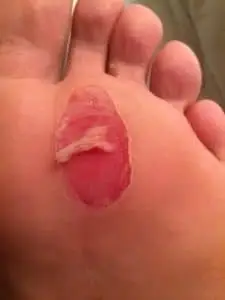
Foot blisters giving you problems?
We have all heard that prevention is better than cure, and in the case of blisters this is definitely true. Our resident exercise physiologist has put together these helpful tips to help you prevent blisters!
What are the best ways to help us prevent blisters?
1. Get your walking boots properly fitted.
Any good walking, hiking and camping shop should have the ability to measure your feet for you. This will ensure that you get the right size and avoid any anterior or posterior slip in the boot or shoe.
Handy tip is to take a pair of hiking socks with you when you get new boots or shoes.
2. Wear two pairs of socks.
The theory behind the two-sock method is that the thin inner liner sock moves with your foot and the outer hiking sock moves with the boot itself. This helps prevent the friction between the main hiking sock and your foot.
Handy tip is to ensure that your base layer sock is thin and fits very well.
3. Wear your walking boots in.
Once you have purchased your new pair of hiking boots or shoes, you need to allow some time to brake them in, the key to doing this is little and often. Doing 3-4kms a few times a week is the key, in preparation for a longer hike. Once your new boots or shoes have become more flexible and warn in a bit, you can start to increase the mileage.
4. Get some blister plasters and some good zinc oxide tape from your local physio.
After you have worn your new boots or shoes in a bit, it’s time to increase the distance. A good tip is to have tape and blister plasters handy. If you find after a few kms that you have a rubbing area on your feet, stop and apply the blister plasters, cover the blister plaster with a layer of zinc oxide tape ensuring that the tape has a good hold on the surrounding skin but does not encompass the foot.
Whenever tape or plasters are used on the feet it is important that one does not encompass the foot ore toes for example do not wrap the plaster or tape around the toe or foot as this my restrict the blood flow to the area and cause tissue death due to lack of blood flow. In extreme cold temperatures blood flow restriction may lead to a rapid frostbite onset and amputation.
If you live in the Newmarket, Windsor, Wilston, or Herston areas contact Pivotal Motion today on 07 3352 5116 and our highly qualified physiotherapist team will be ready to help you get back on your feet!