
The importance of the trunk cannot be understated. If you’ve heard it once you’ve heard it a million times. We need a strong trunk in order to perform well in sports and decrease injury risk. Our minds all flash back to being forced to plank as children as part of our training for whatever sport we take part of. It doesn’t seem to matter which sport you played, you always had to plank. Planks are an effective exercise for increasing our abdominal strength but just how functional are they? A plank is performed with a body that doesn’t move, it just holds the contraction. All sports require either the arms or legs or both to move at once. So yes, we generally are required to keep our trunk still like in a plank, but the arms and legs are moving.
Why is it important?
Having a strong trunk helps us transfer force from one area of the body to another. Every movement we make has contributions from the rest of the body. When you throw a tennis ball for your dog you require your whole body to produce the force behind the throw. You plant your feet, rotate your hips, cock your arm back and then push through your feet, hips, trunk and arm to propel the ball. If you stand still and just use your arm to throw the ball will hardly move. Likewise in sports that involve running. If you have a weak trunk that can’t maintain its position you’re wasting energy with each step. Other muscles must work harder to maintain some sort of posture. This also increases your risk of injury all the way from your low back down to your feet. Having a strong trunk in running increases efficiency of movement and will decrease your injury risk.
 How to begin
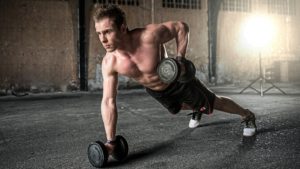
When it comes to strengthening the trunk you can be creative with the exercises you can do. A strong trunk needs to function with the arms and legs are working as well. Isometric exercises like the plank are a good way to start developing the trunk but once you have developed some strength from that it’s wise to move on to some more challenging exercises. Some variations of a plank such as stirring the pot and the bird dog are good progressions that involve the arms and the legs. Deadbugs are also an easy an effective exercise to improve that connection.
Progressing
Once you’ve progressed from the basics you can move on to whole body movements while engaging your trunk. Full body exercises like deadlifts and squats are great exercises that improve total body strength. Other ways to challenge your trunk are to perform your exercises on unstable surfaces or add weight while still controlling the movement.
If you’ve got any questions about the importance of the trunk or would like to speak with a exercise physiologist or a physiotherapist about out exercise classes, call us on 07 3352 5116 or book online.
Updated 22/12/2022