
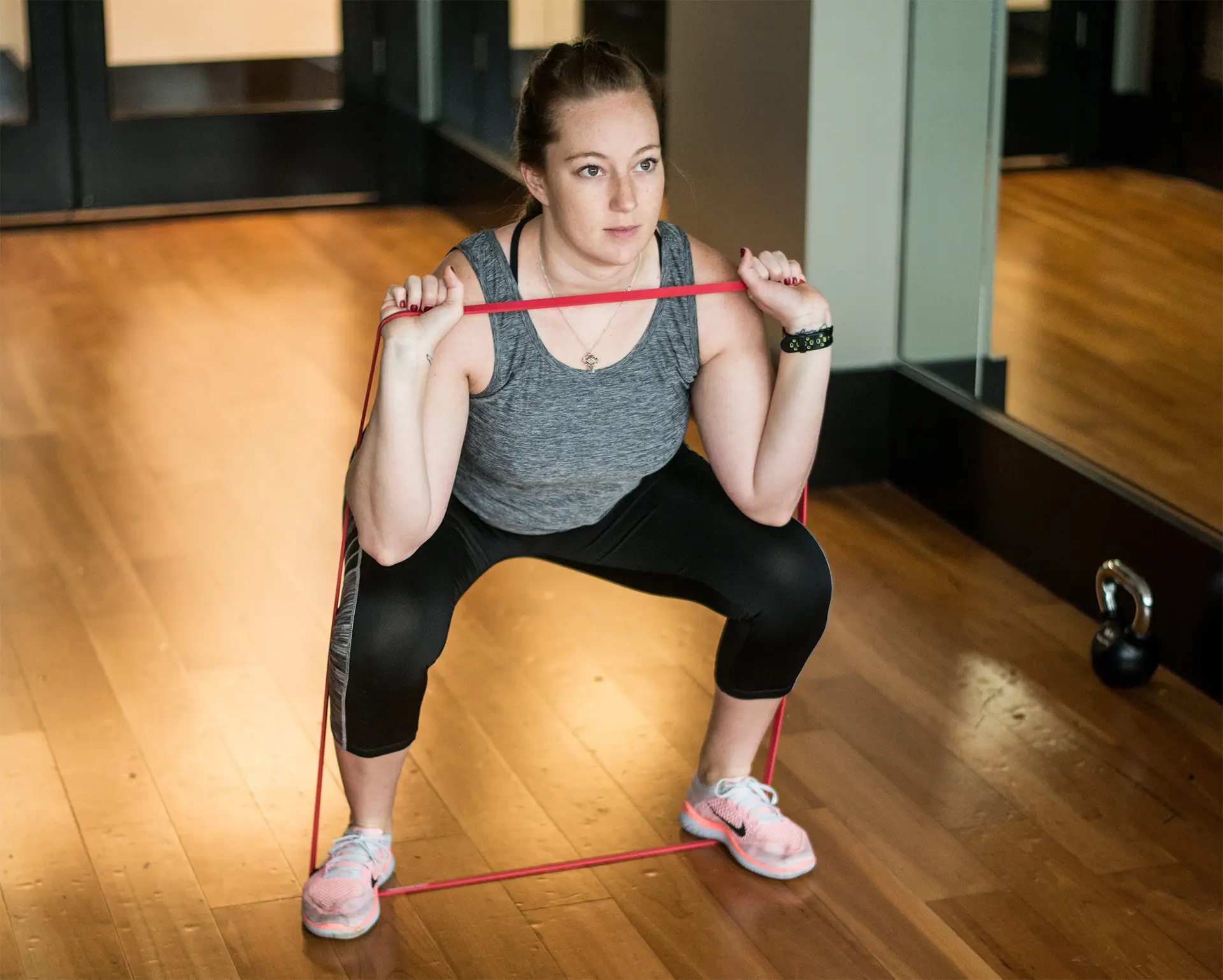
Do you have the correct knee posture during exercise? The knee is the largest joint of the body and one that we use every day. We use it to walk, run, climb and swim. As a result, this joint is at risk of wear, tear and injury. The knee is made up of three major bones, the thigh bone (femur), the shin bone (tibia) and the kneecap (patella). There are interconnecting ligaments, tissues and tendons that create the strength and stability needed to support the knee and the rest of the body. These structures keep the kneecap in line along a track. If it alters position, this can be painful and debilitating (see our article on patellofemoral pain syndrome).
Strength around the knee is incredibly important. As it is used in most daily activities or sporting endeavours, strengthening the knee is essential. Exercises targeting this area do not affect the knee joint directly, but rather strengthen the muscles surrounding it. Therefore, building this area can alleviate pain, pressure or stress on the joint itself.
How to achieve correct knee posture during exercise.
Wall Sit
The good old wall sit is perfect for preventing knee complications. Stand with your head, back and hips against a wall with your feet shoulder width apart. Slide down until you reach a sitting position. Avoid your pelvis dipping below the height of your knees or your knees moving forward over your toes. Hold for 10 second to 1 minute reps depending on your ability. This exercise strengthens the quadriceps to build power and stamina whilst strengthening the knee joint.
Spanish Squat
This squat is similar to the wall sit as it engages the quadriceps and strengthens the knee joint. This exercise uses a resistance band connected to a sturdy object, such as a weight rack. The other end of the resistance band is looped behind both knees or calf muscles, depending on which is more comfortable for you. Sit deep into a squat, allowing your heels to drive into the floor which will help to maintain balance. Remember not to let your knees travel further than your toes.
Crab Walk with Resistance Band
Using a resistance band like in the Spanish Squat, loop this around your thighs just above the knee. You want to feel tension with you ankles separated slightly. Bend a little in both knees and step sideways, so one foot meets the other before continuing the crab walk. This builds muscle above and around the knee joint.
Bulgarian Split Squat
Pivotal Motion suggests Bulgarian split squats as the fourth knee exercise. We show you how to complete this squat from our You Tube channel.
These four exercises are fantastic for powering your knees so you can take great leaps into the future. Our physiotherapy Brisbane team at Pivotal Motion are here to help if you have any concerns regarding the correct knee posture or would like an exercise program tailored to your specific needs. Please call us on (07) 3352 5116.