
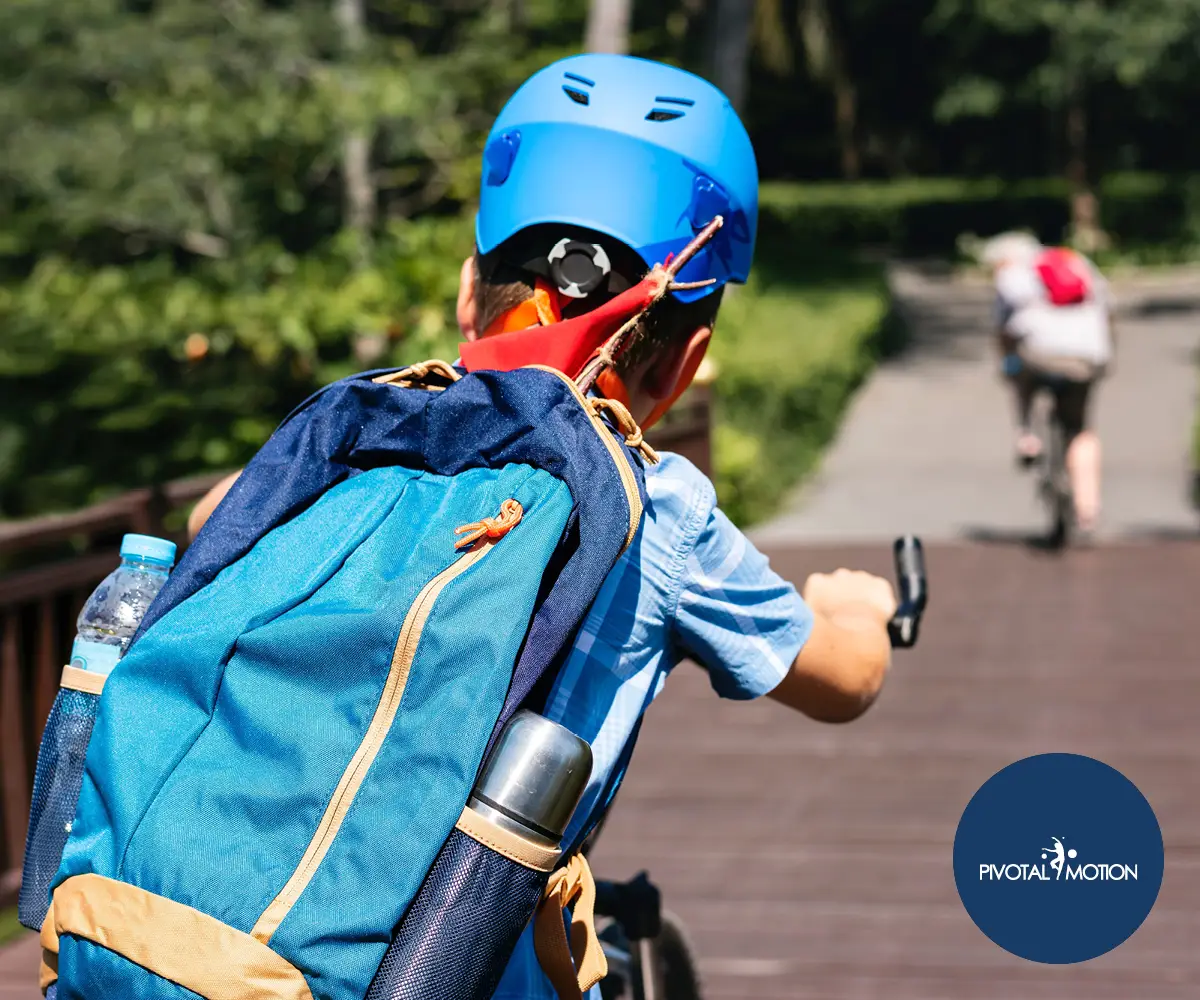
Backpacks come in all sizes, colours, fabrics and shapes. They are not just a means to carry school books and lunch packages around, they are also a way for kids of all ages to express their sense of style.
Compared to shoulder bags or purses, backpacks are better because the back and the abdominal muscles support the weight of the packs. When worn correctly, the weight of the pack is evenly distributed over the body. However, if the backpacks are not adjusted properly – they can strain muscles and joints and lead to back pain.
Problems a backpack can pose
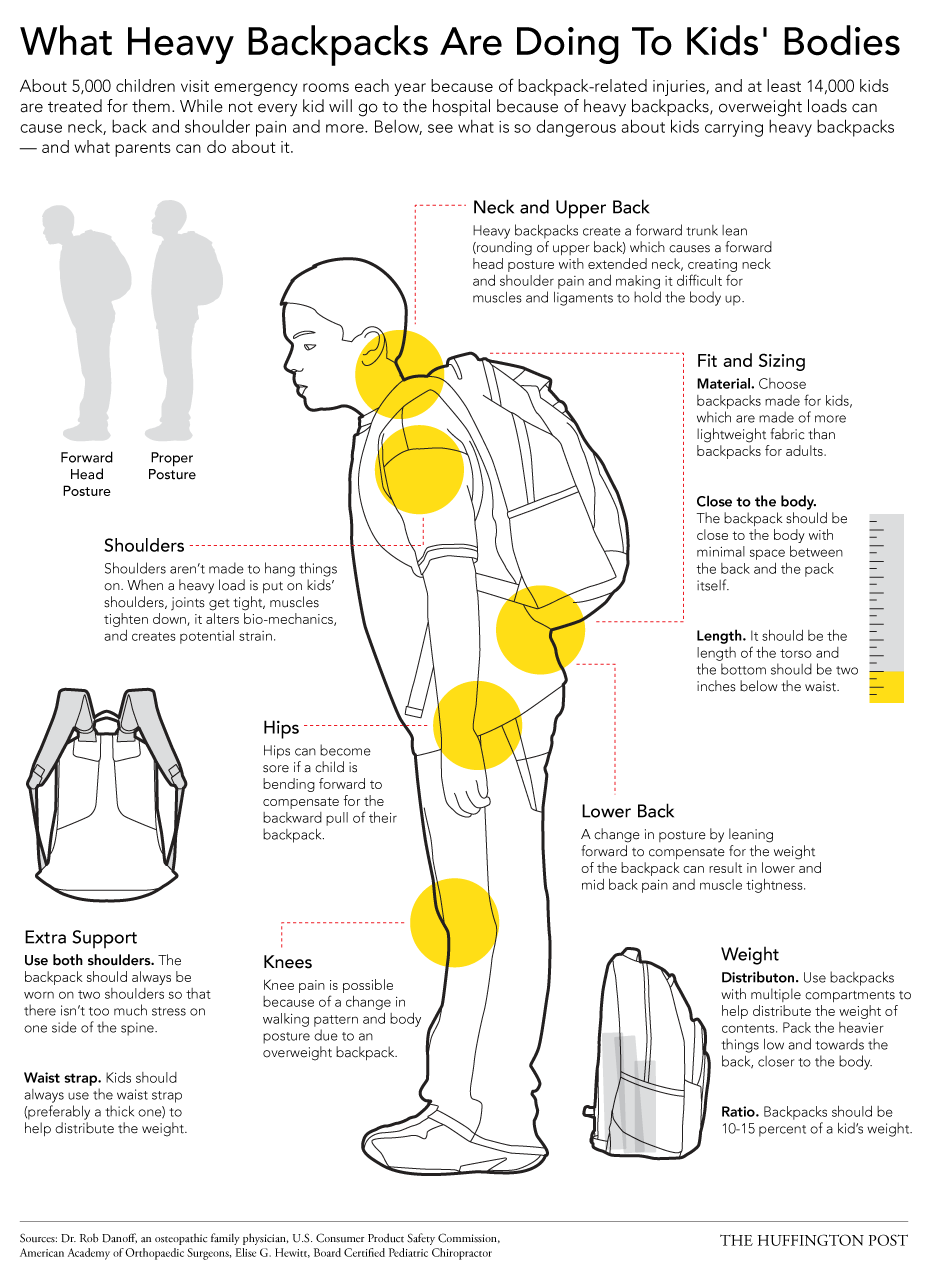
Doctors and physical therapists recommend that children do not carry more than 10-15% of their body weight in the backpacks. However, many kids carry a lot more than that.
When a heavy backpack is incorrectly placed on the shoulders, the weight can pull a child backward – leading to the child bending forward at the hips or arch the back to compensate. This compresses the spine and can lead to shoulder, neck and back pain. A lot of children wear their backpacks on just one shoulder, as it looks better or feels easier. This causes the child to lean to one side to offset the extra weight. Therefore, resulting in lower and upper back pain and strain in the shoulders and neck.
Next to this, backpacks with narrow straps that dig into the shoulders can interfere with circulation and nerves. This can cause tingling, numbness or weakness in the arms and hands. Heavy packs change the way the child walks as well, which can put them at risk of falling (particularly on stairs) as it can put them off balance.
How to find a safe pack?
Despite the problems a backpack can cause, they are great and handy when used properly. Before you buy one, consider the following:
- Lightweight material (e.g. canvas instead of leather)
- Two padded, wide (2-inches), adjustable shoulder straps
- Padded back
- Individualised compartments to distribute weight more evenly
- A waist belt or hip strap to redistribute weight back to the pelvis
- Consider a separate bag for the child’s laptop or other heavy items
Using the backpack wisely
After getting the right pack, it is important to teach your child how to properly load and carry the backpack. Next to lightening the load (making sure the weight of the backpack does not exceed 10-15% of your child’s bodyweight) these are other factors to teach:
- Always use both shoulder straps and wear the backpack on the back instead of over one shoulder.
- Pack the heaviest items into the pack first, so they are carried lower and closest to the body.
- Use the individualised compartments to help distribute weight more evenly.
- Adjust the straps to fit the backpack snugly to the child’s body, holding the bottom 2 inches above the waist and keeping the top just below the base of the skull. DO NOT carry the backpack low near the buttocks.
- Lift the backpack by using the leg muscles and keep it close to the body, NOT by bending over with extended arms
- Do not lean forward when walking, if this is necessary there is too much weight in the pack.
Next to this, children should be encouraged to use their locker and desk to leave items in throughout the day, to not bring unnecessary items to school, and to only bring books needed for homework back home after school.
What else can you do as a parent?
After deciding on the right backpack and discussing proper use of the backpack with your child, there are couple of additional things worth considering including: checking in with your child on whether they are experiencing back aches or shoulder or back pain, talking to teachers in school with regards to minimising their load for the day (e.g. bringing photocopies of a chapter, instead of the whole book), attending PTA meetings to discuss increasing time between classes so that the children have time to go to their lockers to swap books.
Other Top Tips on Returning Back to School from Pivotal Motion Physiotherapy are available online.
If your child complains of back pain, it is recommended to empty and reload the backpack and consider booking an appointment with one of our experienced physiotherapists to discuss your child’s backpack and posture. Call us on 07 3352 5116 or book online to make an appointment today!