
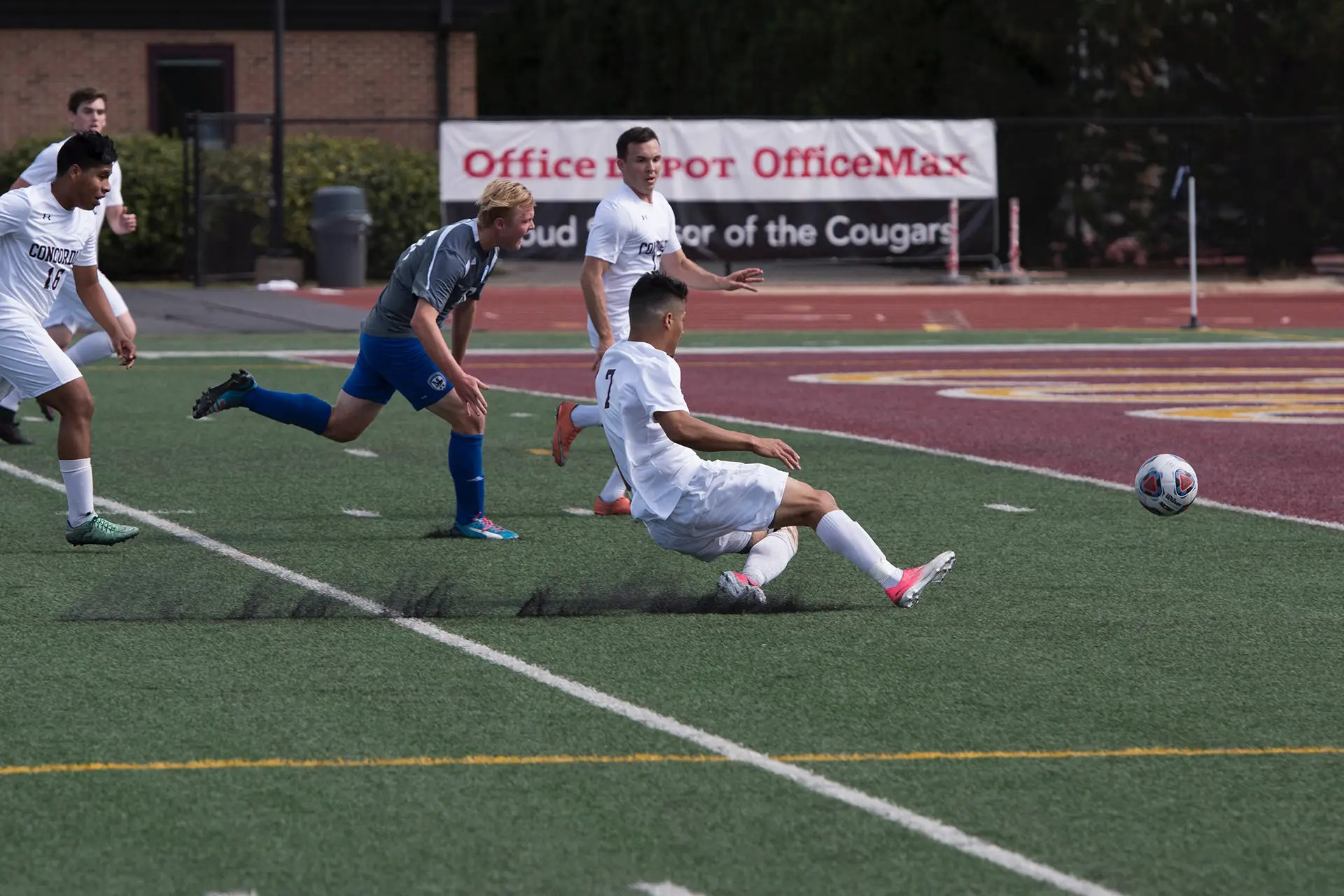
Lower limb muscle weakness is the most common injury risk for athletes in kicking sports. Strengthening the musculature around the joints to create and withstand greater force is integral to help prevent muscle tears and breaks.
Check out these three exercises to help with injury prevention:
Squat
The squat is one of the most well recognised exercises in the gym. It activates many large muscles including the gluteus maximus, quadriceps and adductor muscles. These muscles are all involved in essential sporting movement, such as running and jumping. Adding squats into your workout routine is a great way to strengthen multiple lower body muscles in one functional movement.
Start your squat with your feet shoulder width apart. Slowly lower yourself into a sitting position, trying to get your knees to 90 degrees, before pushing through the heels to return to a standing position. Remember to keep your knees over your toes, heels on the ground and never lock your knees. As you become comfortable with the movement, add some weight for extra resistance.
Leg Extension
The leg extension machine is great to isolate the quadricep group. Rectus Femoris is one of the quadricep muscles, responsible for hip flexion and knee extension. Strengthening this muscle is integral for athletes in kicking sports, like soccer and AFL, as it is the central stress point during kicking motion.
Complete this exercise by sitting on the edge of a bed or bench and lifting your legs until fully extended. A TheraBand or ankle weights can be used to add resistance. Alternatively, you can use the leg machine at the gym. This exercise requires a large amount of force from the knee joint, so consult your physio before you start if you’ve suffered from a serious knee injury.
Copenhagens/Hip Adduction
This last, less common exercise is known as ‘Copenhagens’. This exercise targets the adductors muscles, located in the inner thigh and involved in actions such as running and kicking. Adductor tears are common injuries and often result from weakness in the adductor muscle group.
Start in a side plank position, with one arm supporting the upper body and one leg on top of a bench or box. Then lift the lower leg from the floor to the box and lower back to the ground.
If you have any questions about how to ensure you are performing these exercises properly, or would like a custom plan tailored for you by one of our qualified physiotherapists, call (07) 3352 5116