 The rotator cuff play an important role in shoulder posture and shoulder health. There are 4 muscles that make up the rotator cuff: supraspinatus, infraspinatus, teres minor, and subscapularis. These muscles all originate on the scapula and then attach to the top of the humerus. The role of these muscles is to stabilize the scapula and the humerus during movement of the arm. Our scapula sits on our upper back and has lots of muscle attachments. There are actually no bones that attach the scapula to our body. The muscles that attach to the scapula are what hold it in place. This is why it’s important that we keep our shoulder muscles healthy. Rotator cuff injuries are very common and it’s therefore important to keep on top of your shoulder.
Anatomy
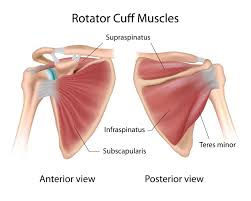
The 4 muscles of the rotator cuff attach on the scapula and then insert onto the upper humerus. The infraspinatus and teres minor both work to externally rotate the humerus. The supraspinatus abducts the humerus, and the subscapularis internally rotates the humerus. Although these muscles have different actions they all work to stabilize the head of humerus. When the rotator cuff are activated they provide a pulling force that brings the head of humerus into the glenoid fossa. This creates more stability for the humerus during movement. The shoulder joint is very mobile, but this comes at a cost. More mobility often equals less stability, which is why we require the muscles involved to be activating correctly
Wear and tear
As with everything in our bodies, there is always age related changes. Due to the narrow spaces that rotator cuff tendons traverse there are often changes to the tendon morphology. This can happen at a young age. If you don’t have any shoulder pain and get an ultrasound, you will find that your tendon has frayed. This is very common and is not a cause for concern. However, if our shoulder posture isn’t ideal we can get pain in this area. That’s why it’s important to warm up your shoulders or have a strength program.
Correct technique
Activating the rotator cuff doesn’t require such brute force. If we have grown up with good posture and muscle activation our body will subconsciously activate the rotator cuff when we move our arm. If we have movement dysfunction then we need to relearn the correct muscle activation technique and perform strength training for the shoulder. To activate the rotator cuff, sit with you arm resting on a table next to you. Ideally, your arm should be at about 30 degrees of abduction. Studies show that there is the greatest EMG activity of the rotator cuff in this position. using your scapular muscles, gently try and bring your arm further into the shoulder joint. You shouldn’t be shrugging your shoulders to do this. The movement should come from the muscles on your scapula. If you can feel them working try to build up how long you can hold your arm there.
Need More Help?
If you have a rotator cuff and would like to know more, contact our physio Brisbane team. We offer shoulder physiotherapy and exercise physiology that can help aid recovery and strengthen your shoulder. Call us on 07 3352 5116, contact us online, or schedule an appointment today.
Updated 17/12/2022