
The sural nerve is a sensory nerve in the lower leg that lies close to the small saphenous vein, situated in the calf. As the bundle of fibers form a branch of the femoral nerve, it is also known as “short saphenous nerve”. It comes off branches of the sciatic nerve, which lies on the back of the thigh.
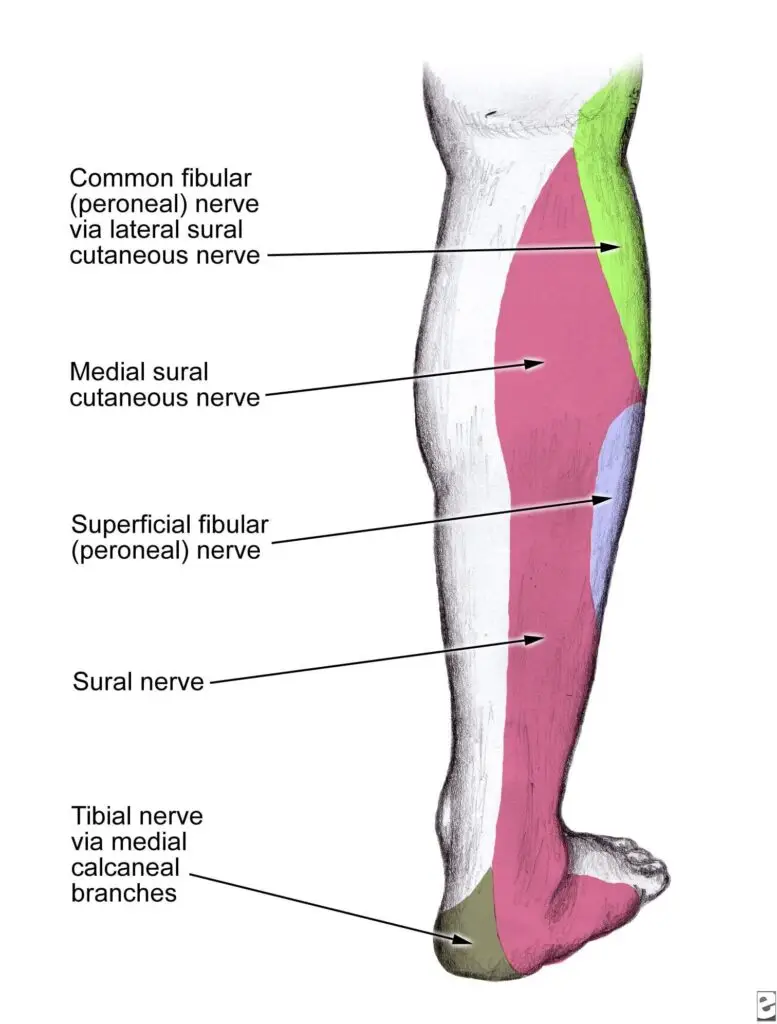
WHERE IS THE SURAL NERVE
It specifically travels down the posterolateral leg and passes the lateral malleous onto the dorsal aspect of the foot. It runs between the two heads of the gastrocnemius and behind the peroneals. It has a branch that crosses the insertion of the Achilles tendon. In cases of footwear that causes rubbing on the heel or tightness around the heel bone it can become inflamed and agitated.
WHAT DOES THE SURAL NERVE DO?
It innervates the muscles of lateral and posterior third of leg as well as the lateral aspect of foot and heel. Like all nerves, its function is to send and receive information to and from the brain.
It predominantly supplies the nervous network to the skin round the rear of the calf and down the side of your foot to your little toe. Its main function is to send sensation information to the brain from the lower leg and outside of your foot.
Experiencing pain in your sural nerve, legs or feet? Learn more about using physical therapy or exercise physiology to increase wellness by contacting a physiotherapist Brisbane relies on for effective and efficient medical treatment. Book an appointment online or speak to one of our friendly team members by calling 07 3352 5116 today.
.
.
Updated 27/07/2022