This article is educational and is not personal medical advice.
Pain, injury and rehabilitation are individual. A Pivotal Motion physiotherapist can assess your
specific symptoms and recommend treatment. To book a consultation, visit
pivotalmotion.physio
or call (07) 3352 5116.
Disclosure:
This post contains affiliate links.
As an Amazon Associate, Pivotal Motion Education earns from qualifying purchases.
There is no additional cost to you.
See our Affiliate Disclosure.
Type “knee brace” into Amazon Australia and you’ll be greeted by hundreds of options. But each type serves a different purpose, which can lead to some confusion. This is why a lot of people end up with a hinged brace when a simple sleeve would suffice. At Pivotal Motion, a physiotherapy clinic in Newmarket, Brisbane, we view knee braces as tools for support and comfort, not as standalone treatments.
Choosing the right brace depends on your specific needs. A brace can provide support and relieve pressure on the knee joint, but it certainly doesn’t replace a professional assessment or rehabilitation. If you’re experiencing pain, swelling, instability, or suspect you have an injury, it’s best to begin with a physiotherapy assessment for your knee.
How we chose these knee braces
Understanding what different types of knee braces do can save you money and prevent unnecessary purchases. Light compression sleeves give you everyday support and warmth, and are ideal for general use. Patella straps apply targeted pressure just below the kneecap, giving you relief for specific conditions. Hinged knee braces enhance stability by supporting the knee from side to side, which can be important when you’re doing certain activities. Open-patella supports reduce pressure that is placed directly on the kneecap, helping with comfort during movement.
We looked at several things when evaluating each brace, including the level and type of support, how well they fit and adjust, comfort during extended wear, breathability, and the durability of the materials for your intended activity level. After all, a brace that becomes uncomfortable after just an hour won’t help much in the long run.
You can find all the braces mentioned here on Amazon Australia, and we’ve chosen them based on practical criteria, not just price. Just keep in mind that this guide gives you general advice only. If you are suffering with a specific knee problem, it’s best to consult a physiotherapist.
The best knee braces in Australia at a glance
Seven picks, each doing a different job. Prices and star ratings move constantly on Amazon AU, so check both on the listing before you buy.
Bauerfeind GenuTrain Knee Support: Best overall support
Features at a glance
| Type | Knitted compression support with side stays |
|---|
| Support level | Firm everyday support |
|---|
| Key features | Silicone Omega pad around the kneecap, flexible side stays, softer zone behind the knee |
|---|
| Fit | Sized by measurements above and below the knee |
|---|
| Care | Machine washable |
|---|
Buy now on AmazonGerman engineering has a reputation for quality, and the GenuTrain Knee Support reflects that. Unlike typical wraps or hinge designs, this support has a unique knitted compression structure and a silicone Omega pad that encircles the kneecap, making sure that the patella remains free of pressure. As you move, the surrounding soft tissue benefits from gentle, intermittent compression, promoting comfort and support.
On each side of the support, flexible plastic stays provide additional stability. The fabric itself is a breathable, medical-grade knit, engineered for durability and ease of care, as it is machine washable. Notably, the design includes a softer zone behind the knee, targeting an area where other sleeves often cause discomfort. This thoughtful construction ensures both effective support and a comfortable fit throughout the day.
Who it suits: anyone who is looking for firm, everyday support that will actually stay on and in place during an activity. It’s low-profile enough to wear under trousers.
The real issue lies in the price (which tops everything else on the list) and the sizing. Bauerfeind determines sizes using measurements above and below the knee. If these measurements aren’t right, you’ll end up with either a loose fit or something uncomfortably tight. Make sure to measure carefully before placing your order.
Physio verdict: this is the most comfortable everyday knee support on the list, and the most popular. It supports and offloads the joint. But, like any knee support, it doesn’t treat whatever is causing the pain.
Check price on Amazon AU: Bauerfeind GenuTrain Knee Support
NEENCA Knee Brace: Best value everyday brace
Features at a glance
| Type | Compression brace with gel pad |
|---|
| Support level | Moderate |
|---|
| Key features | Contoured patella gel pad, dual spring side stabilisers, adjustable straps |
|---|
| Fit | Strap-adjustable compression, open and closed patella versions |
|---|
| Best for | Everyday support while staying active |
|---|
Buy now on AmazonFor years, NEENCA has consistently ranked high among Amazon’s best-selling knee braces, and the reason is simple. They offer a knee brace with a patella gel pad and side stabilisers at a price that rivals standard sleeves, providing excellent value for money.
The contoured gel pad gently wraps around the kneecap, distributing pressure evenly. On either side, metal spring stabilisers provide you with stability by keeping the brace aligned with the joint, also adding lateral support. You can adjust the compression using the straps, making it comfortable for people with thicker thighs or those who just prefer a looser fit throughout the day. There are both open and closed patella options available, though, so make sure you check the details in the product listing.
Who it suits: everyday support and general knee comfort, if you want to stay active without committing to a hinged brace.
The biggest problem is its size. Unlike a thin slip-on knee sleeve, this one adds thickness, and it can feel quite warm if you’re wearing jeans. Also, adjusting the wrap to the perfect tension can be a bit tricky, sometimes requiring several attempts to get it just right.
Physio verdict: this is the best support per dollar on this list. Just check the model carefully, because NEENCA sells several braces under similar names, and the support level differs between them.
Check price on Amazon AU: NEENCA Knee Brace
POWERLIX Knee Compression Sleeve: Best budget compression sleeve
Features at a glance
| Type | Slip-on knitted compression sleeve |
|---|
| Support level | Light |
|---|
| Key features | Elastic nylon and polyester knit, breathable, fits left or right knee |
|---|
| Fit | Sized by knee circumference |
|---|
| Best for | Light compression and warmth on a budget |
|---|
Buy now on AmazonThis budget-friendly option offers a simple slip-on knitted sleeve, and it is entirely free of straps and hinges. Created using a flexible four-way stretch fabric, it features two silicone strips inside the top edge that help keep it securely in place, even during a squat. Its breathable, latex-free material also feels so light you’ll barely notice it’s there.
A light knee support like this one provides you with reliable assistance for everyday activities. You get warmth to the knee, which helps to reduce mild swelling and stiffness. Many people experience increased comfort during walking or engaging in low-impact exercises. These compression sleeves are available for purchase individually or as a pair.
Who it suits: people searching for warmth and light, everyday support for the gym or walking, where you just want the knee joint to feel held.
Compression sleeves primarily provide pressure, but that’s about all. A knitted tube lacks the side-to-side support you might need. Also, if your knee feels unstable or tends to buckle, this isn’t the right solution for you, and extra compression won’t solve the problem either.
Physio verdict: good value for comfort and warmth. Buy it for that, not for stability.
Check price on Amazon AU: POWERLIX Knee Compression Sleeve
Mueller Jumper’s Knee Strap: Best for kneecap (patellar) support
Features at a glance
| Type | Patella (tendon) strap |
|---|
| Support level | Targeted |
|---|
| Key features | Silicone buttress below the kneecap, double-layered comfort liner |
|---|
| Fit | One size fits most |
|---|
| Best for | Load below the kneecap during sport |
|---|
Buy now on AmazonThis strap, unlike a brace, fits snugly beneath the kneecap and features a tubular insert that is designed to evenly distribute pressure along the patellar tendon.
The main focus of this product is its targeted function. Athletes who run or participate in jumping sports frequently experience discomfort in the tendon located just below the kneecap. This strap helps alleviate some of that pressure during physical activities.
It has a fully adjustable Velcro closure that can accommodate a wide range of leg sizes, from approximately 25cm to 56cm in circumference. Its slim design allows it to be worn discreetly under athletic pants. But, as it is made from a neoprene blend, it’s important to consider any skin sensitivities to neoprene before use.
Who it suits: runners and court or jumping sport players wanting targeted kneecap-area support while they train.
The issue here is that the design inherently limits its function. It only offers support to a specific, small area and lacks any compressive force across the joint. This results in a lack of stability. So, if your issue lies outside the tendon, this solution likely won’t provide any real benefit.
Physio verdict: a strap offloads the tendon, which can make training more comfortable while you sort out the actual cause. Pain below the kneecap usually points to a load problem, and strapping over it indefinitely doesn’t fix that.
Check price on Amazon AU: Mueller Jumper’s Knee Strap
Shock Doctor Ultra Knee Support with Bilateral Hinges: Best for hinged stability
Features at a glance
| Type | Hinged knee brace |
|---|
| Support level | High |
|---|
| Key features | Bilateral dual hinges, four-way stretch mesh, pre-curved design, latex-free |
|---|
| Fit | Fits left or right knee, grip tabs for fitting |
|---|
| Best for | Side-to-side knee stability |
|---|
Buy now on AmazonHinges are where knee braces get serious. The Ultra has support hinges down both sides with hyperextension stops built in, plus tempered aluminium stays anchored beside them. That’s what gives it real resistance to sideways movement, rather than the token stiffness you get from spring stabilisers.
The X-Fit strap system wraps the leg and overlaps the hinge, so the brace stays put as the knee flexes. There’s an open patella and four-way stretch mesh behind the knee to stop it from bunching. Shock Doctor rate it Level 3, their higher support tier.
Who it suits: people who want genuine side-to-side stability and a locked-in secure fit during activity, and who don’t mind feeling the brace on their leg.
It is bulky, and it is warm. The vented neoprene helps a little, but you will not forget you’re wearing this, and it won’t hide under slim trousers.
Physio verdict: it delivers stability, and for many people, the confidence to move. What it cannot do is substitute for a diagnosis. Instability needs assessing, and bracing after surgery or a ligament injury should be prescribed by your surgeon or physio, not chosen off a listing. If you’re rebuilding after an ACL injury, the work happens in a program like our ACL rehab program.
Check price on Amazon AU: Shock Doctor Ultra Knee Support with Bilateral Hinges
NEENCA Professional Knee Brace: Best for arthritis comfort
Features at a glance
| Type | Open-patella wrap brace |
|---|
| Support level | Moderate |
|---|
| Key features | Open patella and back, gel ring, metal spring side stabilisers, ventilation holes |
|---|
| Fit | 2 adjustable velcro straps, fits left or right knee |
|---|
| Best for | Comfort with less pressure on the kneecap |
|---|
Buy now on AmazonPressure on the kneecap is what tips a lot of people with arthritic knees out of a brace within a week. This model works around it with an open patella, so the kneecap sits in the gap rather than under fabric. A gel ring surrounds the opening, and spring stabilisers on either side hold the brace steady.
The knit is breathable, and adjustable velcro straps let you change the compression throughout the day, which matters when a knee is stiffer in the morning and looser by afternoon.
Who it suits: people wanting comfort and support through everyday movement and low impact activity, who find a closed sleeve too tight over the kneecap.
Comfort here is personal, and that’s the honest caveat. Some people find an open-patella design takes the pressure off exactly where they need it. Others find the ring edges dig in. It’s a support aid, and nothing more.
Physio verdict: worth trying for comfort and a secure fit during daily activities. It won’t do anything about the osteoarthritis itself. That means strengthening the muscles around the knee joint and managing your load sensibly, which is what osteoarthritis physiotherapy is built around. Talk to a physio or your GP about a plan.
Check price on Amazon AU: NEENCA Professional Knee Brace
McDavid 429X Hinged Knee Brace: Best for sport
Features at a glance
| Type | Hinged sports knee brace |
|---|
| Support level | High |
|---|
| Key features | Polycentric hinges, adjustable cross straps, open padded patella buttress |
|---|
| Fit | Sized by measurement over the middle of the kneecap |
|---|
| Best for | Field and court sport |
|---|
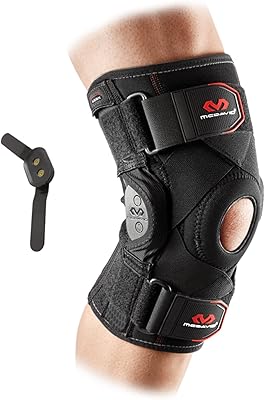
Buy now on AmazonReach for the 429X if you’re heading back onto a field or a court. Its bi-lateral geared polycentric hinges are designed to follow the knee’s real movement as it bends rather than swinging on a single pivot, and the steel uprights on either side resist the sideways and rotational forces that come with cutting and landing.
Elastic cross straps pull the fit in and add support across the collateral ligaments, and an open padded buttress cradles the patella. The neoprene is latex-free and gives thermal compression, with a perforated back panel to shift some of the heat.
Who it suits: field and court sport athletes wanting firm support and a brace that won’t shift mid-game.
It’s the heaviest and warmest pick here. The cross straps need setting properly or they’ll slip, and sizing matters, measured over the middle of the kneecap.
Physio verdict: a real sport brace that supports the joint and, for a lot of athletes, makes returning to play feel less daunting. Don’t read that as injury prevention or as protection for a healing ligament tear. Coming back from a knee injury needs a plan, and sports physiotherapy is where that starts.
Check price on Amazon AU: McDavid 429X Hinged Knee Brace
How to choose the right knee brace for you
Want everyday support and warmth without bulk? A compression sleeve does that and little else. Pain focused below the kneecap when you run or jump points to a patella strap. A knee that feels wobbly side to side wants hinges. A knee that hates pressure on the kneecap does better in an open-patella support.
Budget tracks roughly with that ladder. Sleeves and straps sit at the entry level, wrap-style braces with stabilisers a step up, hinged braces higher again, and premium knitted supports like the GenuTrain at the top.
Then match it to what you’re doing. Walking and everyday use ask very little of a brace. Field and court sport ask a lot, which is where the hinged options earn their bulk. Arthritis comfort usually comes down to what you can tolerate wearing for hours.
Whatever you choose, measure. A brace that’s too loose does close to nothing, and one that’s too tight is uncomfortable and can affect circulation. Brands size differently, so use their chart rather than guessing from your usual size.
One last thing. If you have pain, swelling, a knee that gives way, or you suspect you’ve injured something, get assessed before you self-treat. Pivotal Motion physiotherapy can tell you what you’re dealing with, and whether a brace is part of the answer.
How to fit and use a knee brace safely
Most braces get worn wrong in the same two ways: too tight, and too often.
Fit comes first. If there’s a patella opening or a gel ring, centre it on the kneecap rather than above or below it, because a ring sitting high presses on the quad tendon and drags the whole brace out of alignment. Straps want to be snug enough that the brace doesn’t migrate when you walk, without leaving a trench in your skin when it comes off. With a sleeve, pull it up in one movement instead of rolling it, since a rolled edge behind the knee becomes a hot line of irritation within about twenty minutes.
Then wear it for the job. A brace is for the activity or the period you bought it for, not for every waking hour by default. Check your skin afterwards. Marks that fade quickly are fine. Pins and needles, numbness, a cold foot, or skin that stays angry are all the brace telling you it’s too tight, and the answer is to loosen it or take it off.
Here’s the part product listings skip. A brace provides external support. It doesn’t strengthen anything. Lean on one all day, every day, and the muscles that should be stabilising your knee get a very easy ride. That’s fine for a few weeks around a flare-up. Over months, it becomes its own problem.
Some knees need eyes on them before anything goes near them. Marked swelling, a knee giving way or locking, numbness, circulation problems, diabetes, and any post-operative recovery bracing all belong with a healthcare professional rather than a shopping cart. Book a physiotherapy assessment and get a plan you can strengthen your way out of.
Do knee braces actually work?
Yes, within limits, and the limits matter.
A brace gives you support and compression. It can also improve proprioception, your sense of where the knee is in space. That’s why people so often report feeling steadier and more comfortable in one. The effect is real, and it’s a mix of external support and simply feeling less worried about the joint.
What a brace does not do is repair anything. It won’t knit a ligament back together or rebuild muscle that stopped working, and the evidence for bracing varies quite a bit depending on brace type and situation. Blanket claims on product listings are worth ignoring.
Support and comfort are the realistic benefits, along with the confidence that comes with them. Lasting improvement almost always comes from strengthening the muscles around the joint. A physiotherapist can tell you whether a brace helps your particular knee, and what else needs to happen alongside it.