This article is educational and is not personal medical advice.
Pain, injury and rehabilitation are individual. A Pivotal Motion physiotherapist can assess your
specific symptoms and recommend treatment. To book a consultation, visit
pivotalmotion.physio
or call (07) 3352 5116.
Disclosure:
This post contains affiliate links.
As an Amazon Associate, Pivotal Motion Education earns from qualifying purchases.
There is no additional cost to you.
See our Affiliate Disclosure.
A brace alone won’t mend a sprain, but choosing the right brace can provide you with much-needed support, compression, and a gentle reminder to be more cautious as you navigate through training, work, sports, or the final stages of recovery. We’ve chosen six ankle braces, recommended by a physiotherapist, based on their support type, fit, everyday use, and affordability. You can find these options on Amazon Australia.
Pivotal Motion, a physiotherapy clinic in Newmarket, Brisbane, recommends these choices for everyday use. But if you’ve recently injured your ankle or the discomfort continues, it’s best to schedule an assessment with a physiotherapist and not relying solely on a brace for support.
How we chose these ankle braces
Support type is the first consideration. Both lace-up braces and stirrup braces are intended to restrict the movement of your ankle so that it cannot roll sideways. Compression sleeves and wraps offer more mild support, applying pressure and keeping your joint warm, improving your proprioception, or perception of foot placement.
We assessed how well the brace supports you while allowing enough movement for daily activities, such as a stroll to the store. Each brace is also designed to fit snugly inside a regular shoe, with easy strap adjustments to ensure a perfect fit. We also took into account the breathability of the brace, ensuring it stays comfortable for extended wear without causing irritation.
Every brace we chose is designed with a specific purpose in mind. That could be general support, to provide stability for a rolled ankle, for helping with mild swelling, or for offering a budget-friendly choice. A brace acts as an aid to the efforts you put into strengthening and balancing your ankle. It’s important to remember that it complements, rather than replaces, the exercises that truly enhance your ankle’s stability.
The best ankle support braces in Australia at a glance
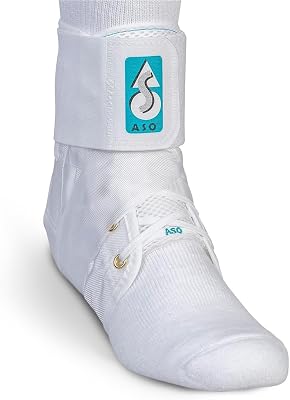
Med Spec ASO Ankle Stabilizer: best overall support
Features at a glance
| Type | Lace-up ankle stabiliser with figure-8 straps |
|---|
| Support level | Firm |
|---|
| Key features | Figure-8 stabilising straps, CoolFlex padding on the tongue, durable nylon |
|---|
| Fit | Bilateral (left or right), low profile to fit inside most shoes |
|---|
| Best for | Firm everyday support and returning to sport |
|---|
Buy now on AmazonYou’ll often spot the Med Spec ASO Ankle Stabilizer in clinics and on the sidelines, and for good reason. This lace-up nylon boot features stabilising straps that wrap in a figure-8 pattern around the joint, closely mimicking the support a physiotherapist provides with tape. Unlike tape, however, this stabiliser lasts all day and can be easily adjusted whenever needed. A woven elastic cuff secures the top, preventing the laces and straps from coming undone, while CoolFlex padding along the Achilles tendon and the tongue offers comfort by preventing any digging into the skin. Designed to be bilateral, it fits either foot and maintains a low profile, allowing it to fit comfortably inside most athletic shoes.
This one would suit someone who wants firm everyday support, as well as anyone easing back into activity after suffering from a rolled ankle who wants the joint held firmly rather than gently.
The main considerations are its size and the time it takes to put on. Properly lacing it up requires a minute or two, and it feels bulkier than a sleeve. If you’re looking for something quick and easy to wear before taking the dog out for a walk, you might want to check out other options listed below.
Physio verdict: strong lateral support without going fully rigid, and the most versatile brace here.
Bauerfeind MalleoTrain: best for compression and comfort
Features at a glance
| Type | Knitted compression support |
|---|
| Support level | Light to moderate compression |
|---|
| Key features | Two contoured pads either side of the ankle, breathable knit |
|---|
| Fit | Left and right specific, sized to the Bauerfeind chart |
|---|
| Best for | All-day comfort when you want compression over firm stability |
|---|
Buy now on AmazonThe Bauerfeind MalleoTrain is the most comfortable, and that’s exactly what it has been designed for. This ankle support features a breathable, knit compression sleeve that is designed with two viscoelastic pads that contour to either side of the ankle. These pads make sure that pressure targets the soft tissues surrounding the joint while avoiding direct contact with the bone. The fabric is designed with a gradual compression that gently tapers at the edges to prevent any tourniquet-like sensation. It’s also lightweight enough to be worn under a sock, so you may not even remember you’re wearing it.
This one would suit a person suffering from mild swelling and achy ankles that flare after a long day on their feet. It also works for anyone who wants support without the rigid feel of a lace-up.
Two things to know. It’s the priciest option here by some margin, and it does far less to stop the ankle rolling than a lace-up or a semi-rigid brace. Sizing is also left and right specific, so pick the correct side and measure to the Bauerfeind chart rather than guessing.
Physio verdict: the most comfortable brace on this list for daily wear, chosen for compression and feel rather than hard stability.
Zamst A2-DX: best for sport and rolled-ankle stability
Features at a glance
| Type | Semi-rigid brace with side guards and straps |
|---|
| Support level | High |
|---|
| Key features | Moulded guards on both sides to limit rolling in and out, two cross straps |
|---|
| Fit | Fits left or right, sized by shoe size |
|---|
| Best for | Court and stop-start sport |
|---|
Buy now on AmazonThe Zamst A2-DX is arguably the sturdiest option available. It has dual moulded exterior guards, known as Exo-Grid, that are positioned along either side of the ankle to physically prevent both inward and outward rolling. Beneath the ankle, two cross straps create a taping pattern that prevents the foot from moving forward, while an upper anchor strap gives you additional support around the high ankle. This one is designed for both left and right ankles, and it opens at the back for easy wear. Sizing is based on your shoe size, not the circumference of your ankle, making it convenient to select the right fit.
It’s a fantastic option for netballers, basketballers, footballers and basically anyone in stop-start court sport with a history of rolling, particularly if you’ve had a high ankle sprain and you’re nervous about the next cut.
However, it’s a lot of brace. It runs warm, it’s pretty bulky in tight footwear, you might need a half size up in your shoes, and the moulded guards can really take some getting used to.
Physio verdict: the strongest stability here, and it earns its place alongside a proper ankle strengthening program rather than instead of one.
McDavid 195: best value lace-up
Features at a glance
| Type | Lace-up brace with figure-6 straps |
|---|
| Support level | Moderate to firm |
|---|
| Key features | Single-layer polyester, ventilated tongue, padded lining, compression top strap |
|---|
| Fit | Fits left or right, straps adjust without unlacing or removing your shoe |
|---|
| Best for | Training and court sport on a mid budget |
|---|
Buy now on AmazonThe McDavid 195 has a similar level of support as the ASO ankle brace, but at a more affordable price. This ultralight model is made from a single layer of nylon and has a lace-up design with adjustable straps, which mimics the support you’d get when using athletic tape. One standout feature is the ability to adjust the straps without needing to unlace the brace or remove your shoe, which makes it easier to tighten during activity. The brace includes a ventilated tongue for breathability, a padded inner lining for added comfort, and a built-in arch. With its bilateral fit, it can be worn on either ankle, adding to its versatility.
This brace is perfect for someone looking for flexible support in training or court sports without spending a fortune, especially if it’s only going to be used a couple of times a week. However, it does have its limitations. Unlike some of the more rigid options, such as the Zamst guard brace, this one offers less stiffness. Also, after extended use, the straps may loosen, so you might need to tighten them during breaks.
Physio verdict: a dependable lace-up that gets you most of the way to the ASO for less money.
Bracoo Ankle Support (FS60): best budget
Features at a glance
| Type | Compression sleeve with adjustable wrap strap |
|---|
| Support level | Light |
|---|
| Key features | Breathable airy knit, woven heel cup, sold as a 2 pack |
|---|
| Fit | Two sizes (S/M and L/XL), slim enough to wear inside shoes |
|---|
| Best for | Light everyday support on a budget |
|---|
Buy now on AmazonHaving a limited budget doesn’t mean settling for inferior products. The Bracoo Ankle Support (FS60) gives you a practical solution with its lightweight knit sleeve and adjustable elastic wrap strap. Sold as a pair, this product ranks among the top-selling ankle braces on Amazon Australia, and its breathable knit construction minimises heat retention, so you’re getting comfort while you wear it. Also, the heel cup’s reinforced weave provides extra durability. The single strap allows you to easily adjust the compression level to your preference, and it is slim enough to fit comfortably inside a shoe without being noticeable.
This ankle brace is perfect for anyone who needs light support for daily activities, casual walking, or just for first-time users who are looking for an affordable option to have on hand. But it’s important to understand its purpose before you click buy. This brace is designed to provide gentle guidance for your ankle rather than firm restriction. So, if you have a significantly unstable ankle, especially in a high-impact sport like netball, this might not provide the stability you need.
Physio verdict: low cost and low bulk, useful for comfort and confidence rather than firm sport stabilisation.
POWERLIX Ankle Compression Sleeve: best compression sleeve for swelling
Features at a glance
| Type | Slip-on compression sleeve |
|---|
| Support level | Light compression |
|---|
| Key features | No laces or straps, slim knit, sold as a pair |
|---|
| Fit | Sized by the POWERLIX chart, fits under regular socks |
|---|
| Best for | All-day comfort and warmth for achy ankles |
|---|
Buy now on AmazonThe POWERLIX Ankle Compression Sleeve provides an easy solution for anyone looking for support without any extra frills. This pair of slip-on sleeves, created from a stretchy blend of nylon and spandex, keeps you comfortable by moving with you and keeping sweat at bay. No laces or straps mean you can simply pull them on, and they deliver consistent pressure around your ankle. Also, their slim design means they can fit discreetly under your regular socks, making them perfect for everyday wear.
This works well for easing mild swelling and soothing aching ankles after spending long hours on your feet. It also provides some warmth and support for your joints during activities like running or hiking. There are two in the box, so you get added value and convenience if both of your ankles tend to feel sore at the same time. But keep in mind that this brace doesn’t offer side-to-side support, so if your ankles have a tendency to roll during sports, you might need to look at a different option.
Physio verdict: the easiest thing here to live with, chosen for comfort and value rather than stability.
How to choose the right ankle brace for you
If you are looking for firm everyday support, or you are returning to activity after rolling your ankle, a lace-up is the one to go for. The Med Spec ASO is the better brace, the McDavid 195 is the better buy, and both use strapping to resist the twist that caused the problem in the first place.
If you play court or stop-start sports and your ankle gives way easily, choose a semi-rigid sleeve. The Zamst A2-DX gives you the most stability of anything on the list, and it’s the best choice if chronic ankle instability is the thing that’s keeping you off the court.
If your ankle is more achy than unstable, or it swells after a long day, a compression sleeve is a better fit than a brace that locks it down. The Bauerfeind MalleoTrain is the comfortable one, and the POWERLIX is the affordable one. The Bracoo FS60 sits in between, with a strap if you want a little extra.
Firmer braces trade range of motion for stability, which is worth it during sport and annoying the rest of the time. And whatever you choose has to fit inside your shoe, so allow for the extra bulk before you commit.
If the ankle is giving way regularly, get it looked at. A brace manages the symptom; ankle physiotherapy and rehabilitation addresses why it’s happening.
How to fit and use an ankle brace safely
Size it properly first. Every brand’s chart is different, and several of these braces are left and right specific, so measure as the manufacturer directs rather than eyeballing it. A brace that’s the wrong size will either slide around or press where it shouldn’t.
When worn properly, it should provide support and fit snugly without causing any discomfort. If you notice your toes tingling, feeling cold, going numb, or changing colour, it’s too tight. Loosen it immediately. In this instance, you’re not breaking in a brace; you’re restricting blood flow.
Start by putting on a lace-up or semi-rigid brace over a thin sock. Keep your first few sessions brief. After each session, take a moment to examine your skin for any signs of rubbing, particularly around the heels and ankle bones. If you spot any irritation on the first day, address it immediately to prevent blisters from developing in the coming days.
An ankle brace provides support to the joint, but it won’t improve its strength. To truly reduce the risk of getting another sprain, you need to focus on building your calf strength, enhancing single-leg balance, and learning how to control your foot when it’s under pressure. Just buying a brace won’t achieve these goals. You need to use the brace as a tool to continue your training, but make sure to work on these essential skills alongside it.
Certain circumstances need expert input. If you think you might have a fracture, are suddenly experiencing new or severe sprain, have seen significant swelling, feel any level of numbness, have diabetes or circulation issues, or you are dealing with persistent pain, talking to a physiotherapist should be your first step. A professional assessment will give you an insight that a product page like this cannot provide, and sports physiotherapy will give you a clear understanding of your ankle’s condition.
Do ankle braces actually work?
Ankle braces serve a specific purpose. They give you support and restrict any excessive movement, which stops your ankle from rolling too far. This gives you a better awareness of the joint’s position.
A brace can’t solve the root issue. If the ligaments are loose and the stabilising muscles around the ankle are weak, the brace simply provides temporary support while the real cause of the weakness remains. Braces are most effective when used alongside rehabilitation efforts, and they are not a substitute for them.
If you find that wearing an ankle brace helps you return to sports quicker or allows you to walk without any fear, go ahead and use it. But, if you find yourself frequently rolling your ankle, it’s best to consult a physiotherapist for a personalised program. This can help you strengthen your ankle and could eliminate the need for the brace altogether.